 US Dollar

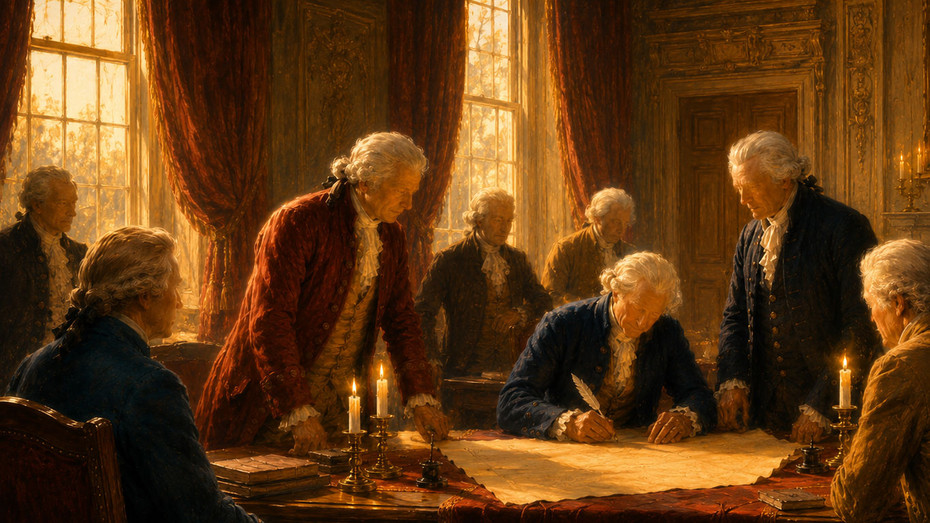
Day One to Year 250: The American Story That Started It All.
How America Actually Came to Be
Independence Day shows up every summer with fireworks, cookouts, and a day off work, and it's easy to let it pass by as just that. But behind the holiday is one of the boldest decisions a group of people has ever made together. Thirteen separate colonies, with thirteen separate governments and plenty of disagreements among themselves, looked at the most powerful empire on Earth and said: not anymore.
With America's 250th birthday landing in 2026, it's worth slowing down and actually telling that story. Not just the headline of July 4, 1776, but everything that led up to it, what happened right after, and the long chain of moments that turned one bold decision into 250 years of a country.
Before Day One: What Set Everything in Motion
The road to independence didn't start with the Declaration. It started more than a decade earlier, and it built up slowly, the way most big decisions do.
After the French and Indian War ended in 1763, Britain was deep in debt and looking for ways to pay it down. The colonies seemed like an easy place to raise money, so Parliament started passing a series of taxes: the Sugar Act, the Stamp Act, the Townshend Acts. None of these taxes were enormous on their own, but they introduced a question the colonists couldn't shake: why were decisions about their money, their trade, and their daily lives being made by a Parliament they had no voice in? "No taxation without representation" became more than a slogan. It became the central argument of the whole movement.
Tensions kept building through the 1760s and into the 1770s. The Boston Tea Party in December 1773 turned a tax dispute into a full-blown standoff, with colonists dumping 342 chests of British tea into Boston Harbor rather than pay a tax they had no say in. Britain responded with the Intolerable Acts, clamping down hard on Massachusetts, and instead of scaring the colonies into line, it pushed them closer together. In September 1774, delegates from twelve of the thirteen colonies met in Philadelphia for the First Continental Congress, the first time these separate colonies sat down together as something resembling a unified group.
Then in April 1775, shots were fired at Lexington and Concord, and the disagreement turned into an actual war. A Second Continental Congress convened just weeks later, and this time the conversation wasn't just about protesting taxes. It was about what came next.
Day One: July 4, 1776
By the summer of 1776, a growing number of delegates believed there was no turning back. A five-man committee, including Thomas Jefferson, John Adams, and Benjamin Franklin, was tasked with putting the colonies' case into words. Jefferson did most of the writing, drawing on ideas about natural rights and self-government that had been circulating among Enlightenment thinkers for decades, and shaping them into something sharper and more direct than anything that had come before.
On July 2, 1776, the Continental Congress voted in favor of independence. Two days later, on July 4, they formally adopted the Declaration of Independence, the document that laid out, plainly and permanently, the idea that government exists to serve the people, not the other way around, and that certain rights belong to everyone simply by being human. It was signed by representatives of all thirteen colonies, a unified statement from a group that had spent years arguing its way toward agreement.
It's worth remembering that this wasn't a safe move. Signing that document was treason in the eyes of the British crown, punishable by death. Every signature on that page was a real bet, placed by real people, on an idea that had never quite been tried at this scale before.
Year One: The Fight to Make It Real
Declaring independence was the easy part compared to what came next. Year one of the United States wasn't spent in celebration. It was spent fighting a war against the most powerful military in the world, with a Continental Army under George Washington that was undersupplied, underpaid, and often outnumbered.
The early years of the war were rough. New York fell to the British in late 1776, and Washington's army spent that winter in retreat. But a string of bold moves, including the famous crossing of the Delaware River on Christmas night and the victory at Trenton that followed, kept the cause alive when it easily could have collapsed.
The turning point came in October 1777 at the Battle of Saratoga, a major American victory that convinced France the colonies might actually have a shot. France formally allied with the United States in 1778, bringing money, soldiers, and a navy that helped even the odds. That alliance, built in year one and the years right after, ended up being decisive. It took until 1781 for the war to effectively end at Yorktown, and until 1783 for Britain to formally recognize American independence with the Treaty of Paris. The country that started as an idea on a piece of paper in Philadelphia had, after years of sacrifice, become a real, independent nation.
The Moments That Carried Us to 250
From there, the story of America became the story of a country continuously building on its own founding promise. A few moments stand out as turning points along the way.
In 1787, delegates gathered again in Philadelphia, this time to write the Constitution, the framework of government that's still in use today, followed in 1791 by the Bill of Rights, which locked in protections like freedom of speech, religion, and assembly. The Louisiana Purchase in 1803 doubled the size of the country overnight, and the Lewis and Clark expedition that followed opened up the continent to a young nation eager to grow. Through the 1800s, the country kept expanding westward, adding states, building railroads, and eventually connecting coast to coast with the completion of the transcontinental railroad in 1869.
The nation's founding promise that all people are created equal kept getting put into practice more fully over time, including the formal end of slavery through the 13th Amendment in 1865, and women winning the right to vote nationwide with the 19th Amendment in 1920. Each one was a step toward the country living up to the words written in 1776.
The 20th century brought America onto the world stage in a major way. American industry and manpower played a decisive role in both World Wars, and the post-war era turned the country into a global leader in everything from manufacturing to civil rights to space exploration, culminating in the Apollo 11 moon landing in 1969, a moment that captured the same boldness that had defined the country from day one. The decades since have carried that same spirit forward through new technology, new industries, and a population that has grown from roughly 2.5 million at the time of the Declaration to well over 330 million today.
250 Years Later
Stack all of that up, and the 250th anniversary starts to feel less like a number on a calendar and more like the result of two and a half centuries of people choosing, again and again, to build on what started in Philadelphia. A debate over taxes turned into a Declaration. A Declaration turned into a war. A war turned into a Constitution. And a Constitution turned into the country we're celebrating today.
Whatever your plans are for July 4, 2026, you're taking part in something that started with thirteen colonies, a stack of grievances, and a five-man writing committee working against the clock. Two hundred fifty years later, that same spirit is still worth a celebration.